Which two oasis cities does the exam expect you to name as concrete Silk Roads anchors, marking points where desert-crossing caravans had no choice but to pass through?
Explanation
The Young Turks seized power in the Ottoman Empire in
Explanation
The map below shows Cold War alliance blocs alongside newly independent states in Africa and Asia, c. 1955. Based on the map, which statement accurately describes the geographic relationship between the two Cold War blocs and the two regions of decolonization shown?
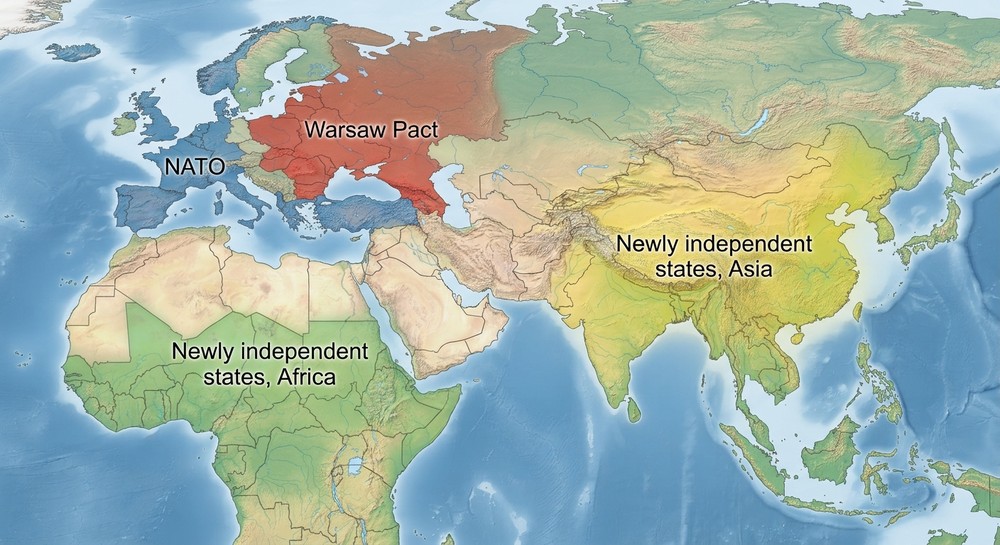
Explanation
The map below shows major Afro-Eurasian trade circuits active c. 1200–1450. Based on the routes shown, which circuit connected West Africa to the Mediterranean world using an entirely overland route?
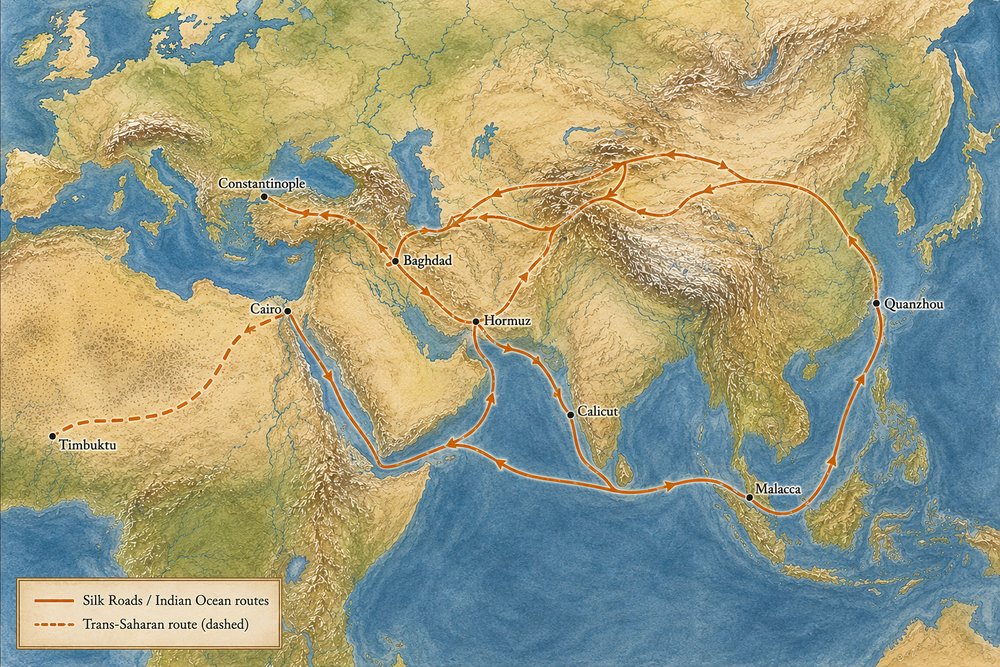
Explanation
The shipping container's significance for global trade, per this topic, was that it
Explanation
John Locke's concept of natural rights held that life, liberty, and property
Explanation
Song Dynasty China's commercial boom (960–1279) included which world-first financial innovation?
Explanation
Historians group the Ottoman, Safavid, and Mughal empires together as "gunpowder empires" because
Explanation
The caravel's key innovation was combining the lateen sail with
Explanation
The map below shows a simplified version of European colonial claims in Africa around 1914. According to the map, which colonial power’s territory is surrounded on multiple sides by a single other power’s claim, rather than bordering several different claimants?
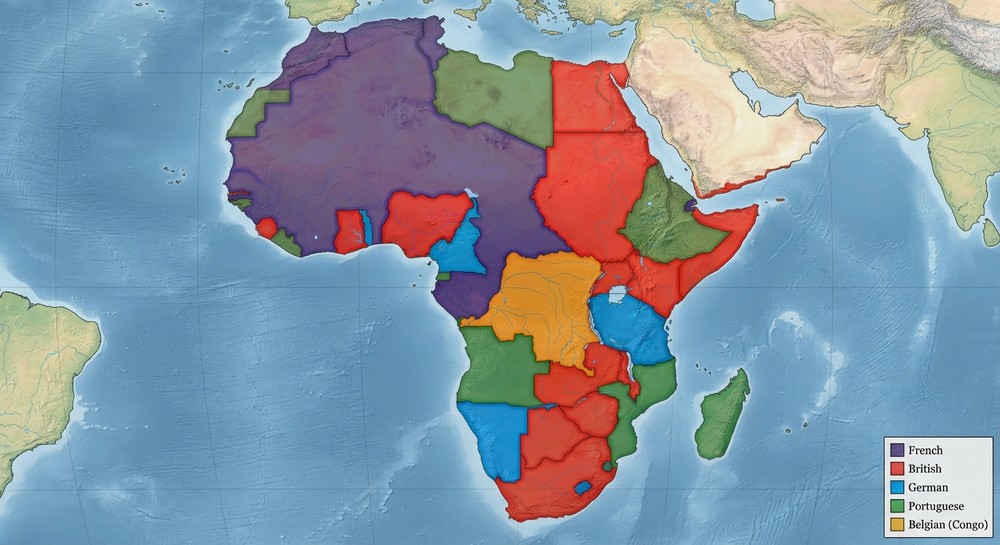
Explanation
Read the excerpt, then answer parts (a), (b), and (c).
"Let their faculties have room to unfold, and their virtues to gain strength, and then determine where the whole sex must stand in the intellectual scale." — Mary Wollstonecraft, A Vindication of the Rights of Woman, 1792
(a) Identify ONE specific natural-rights argument, associated with a named Enlightenment thinker, that a document from an Atlantic revolution of this period (c. 1750–1900) borrowed directly from Enlightenment political theory.
(b) Using the excerpt above, explain how Wollstonecraft's argument exposed a specific internal inconsistency within Enlightenment political theory as it was actually applied in this period.
(c) Explain ONE specific way that the social changes brought by industrialization reorganized gender roles for EITHER working-class OR middle-class women in the nineteenth century.